+86-731-82739266
info@topsflo.com
The Leader of High-end Micro DC Pump in China

 +86-731-82739266
The rapid growth of artificial intelligence (AI), cloud computing, and high-performance computing (HPC) is driving unprecedented increases in data center power density. Traditional air cooling methods are increasingly challenged in maintaining optimal operating temperatures.
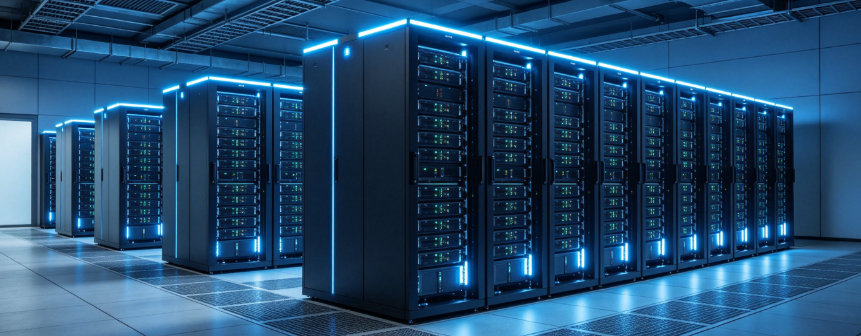
Data Center Energy Consumption Continues to Rise
According to the International Energy Agency (IEA), data centers currently account for approximately 1%–1.5% of global electricity consumption, with cooling systems representing up to 40% of a data center’s total energy use.
As computational workloads continue to expand, improving cooling efficiency has become one of the most effective ways to reduce operational costs and enhance sustainability.
Source: International Energy Agency (IEA), Electricity 2024 – Analysis and Forecast to 2026.
AI Workloads Are Driving Higher Rack Power Density
The emergence of generative AI has dramatically increased server heat loads.
According to research from Dell’Oro Group, traditional enterprise server racks typically operated at power densities of around 5–10 kW per rack. However, AI server deployments increasingly require 30–50 kW per rack, while some advanced AI clusters already exceed 100 kW per rack.
At these heat densities, conventional air cooling approaches become difficult to scale efficiently.
Source: Dell’Oro Group, Data Center Physical Infrastructure Reports.
Liquid Cooling Can Improve Energy Efficiency
The American Society of Heating, Refrigerating and Air-Conditioning Engineers (ASHRAE) notes that liquid cooling technologies provide significantly higher heat transfer capabilities than air cooling.
Industry studies indicate that liquid cooling can reduce cooling-related energy consumption by 30%–40%, depending on system architecture and operating conditions.
This improved efficiency contributes to lower operating costs and better Power Usage Effectiveness (PUE).
Source: ASHRAE Thermal Guidelines for Data Processing Environments.
The Liquid Cooling Market Is Experiencing Rapid Growth
The global liquid cooling market for data centers is expanding rapidly as organizations upgrade their infrastructure to support AI applications.
According to MarketsandMarkets, the global data center liquid cooling market is projected to grow from approximately USD 4.9 billion in 2024 to more than USD 21 billion by 2030, representing a compound annual growth rate (CAGR) exceeding 25%.
This growth highlights the increasing adoption of liquid cooling technologies across hyperscale, enterprise, and colocation facilities.
Source: MarketsandMarkets, Data Center Liquid Cooling Market Forecast.
While cold plates and heat exchangers often receive the most attention, the circulation pump serves as the “heart” of the liquid cooling loop.
A reliable server cooling pump directly affects:
• Coolant flow stability
• Heat transfer efficiency
• System uptime
• Energy consumption
• Maintenance frequency
• Overall cooling reliability
Even minor fluctuations in coolant flow can impact component temperatures and reduce computing performance under sustained workloads.
For mission-critical environments such as AI clusters and cloud data centers, pump reliability is therefore a fundamental requirement rather than an optional feature.
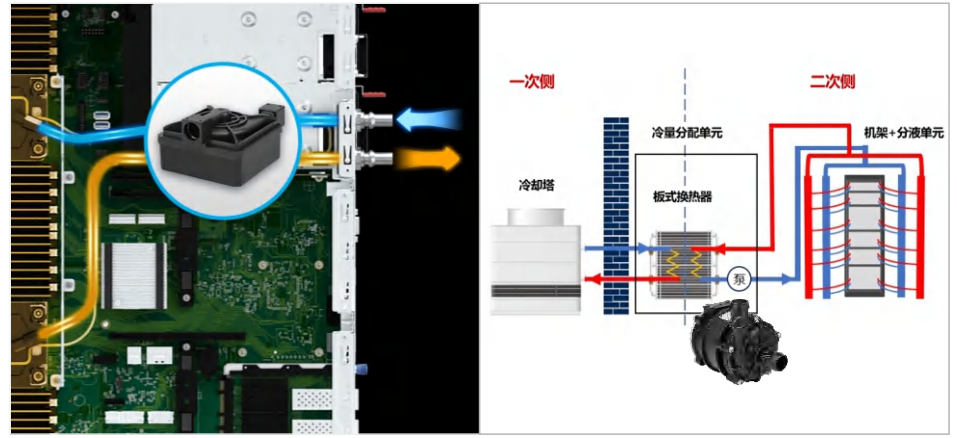
As liquid cooling adoption accelerates, pump manufacturers must meet increasingly demanding requirements for efficiency, durability, and intelligent control.
TOPSFLO server cooling pumps are engineered to address these challenges through:
• High-efficiency brushless DC motor technology
• Leak-resistant magnetic-drive structures
• Long service life exceeding >30,000 hours
• PWM, FG, and I²C intelligent control options
• Compatibility with multiple coolant media
• Compact designs suitable for dense server architectures
These capabilities help system integrators and equipment manufacturers build reliable thermal management systems capable of supporting next-generation computing applications.
References
International Energy Agency (IEA). Electricity 2024: Analysis and Forecast to 2026.
ASHRAE. Thermal Guidelines for Data Processing Environments.
Dell’Oro Group. Data Center Physical Infrastructure Reports.
MarketsandMarkets. Data Center Liquid Cooling Market Forecast.
Uptime Institute. Global Data Center Survey.
Recommend you also directly send and email to info@topsflo.com to get our fastest response.



Recommend you also directly send and email to info@topsflo.com to get our fastest response.